<?xml version="1.0" encoding="utf-8"?><feed xmlns="http://www.w3.org/2005/Atom" ><generator uri="https://jekyllrb.com/" version="3.10.0">Jekyll</generator><link href="https://klankers.github.io/feed.xml" rel="self" type="application/atom+xml" /><link href="https://klankers.github.io/" rel="alternate" type="text/html" /><updated>2026-08-02T21:31:22+00:00</updated><id>https://klankers.github.io/feed.xml</id><title type="html">Aaron Mau</title><subtitle>Hydrothermal Geochemistry, Repeat Hydrography, Ocean Modelling.</subtitle><author><name>Aaron Mau (he/him)</name><email>aaron.mau@voiceoftheocean.org</email></author><entry><title type="html">GSoC 3</title><link href="https://klankers.github.io/blog/gsoc-3/" rel="alternate" type="text/html" title="GSoC 3" /><published>2026-08-02T00:00:00+00:00</published><updated>2026-08-02T00:00:00+00:00</updated><id>https://klankers.github.io/blog/gsoc-3</id><content type="html" xml:base="https://klankers.github.io/blog/gsoc-3/"><![CDATA[<p>QARTOD is going to Canada.</p>

<p>Later this month, I’ll be attending my first ever <a href="https://oceanhackweek.org/">Ocean Hack Week</a>. It’s about a week of programming-focused scientists meeting at some location, picking projects, and then teaming up to knock them out with an oral presentation sprinkled in here and there. I attended something similar to this in 2018, called the <a href="https://oceanhackweek.org/CAHW2018_website/">CableArray Hack Week</a> for the OOI Regional Cabled Aray, but I’ve never attended an OHW myself. To be fair, I didn’t really know what I was doing at the CAHW, either.</p>

<p>My goal is to get the <em>required</em> and <em>strongly recommended</em> QARTOD tests done by then. This would demonstrate that everything that is more than a mere suggestion is implemented, and it’s a good opportunity for feedback. There’s only so much you can do on a Slack forum or GitHub repo to get community engagement. When you’re locked in a room with other qualified individuals, it’s much more likely you’ll hear back on some of it.</p>

<p>That being said, this is only possible because of a GSoC extension. Considering how much networking I’ve been doing, my mentors and I decided to extend from August to November to work on GSoC. This provides additional time to complete the rest of the tests with potential to share along the rest of the way.</p>

<table>
  <thead>
    <tr>
      <th>Stage</th>
      <th>Stage specifications</th>
      <th>Time required</th>
      <th>Start-End</th>
    </tr>
  </thead>
  <tbody>
    <tr>
      <td>1</td>
      <td>Learn about the community and note shortcomings or additional toolboxes, such that the wheel need not be reinvented.</td>
      <td>3 weeks</td>
      <td>May 1 - May 24</td>
    </tr>
    <tr>
      <td>2</td>
      <td>Begin test assessments and complete Group 1 “required” tests.</td>
      <td>9 weeks</td>
      <td>May 25 - July 26</td>
    </tr>
    <tr>
      <td>3</td>
      <td>Complete Group 2 “Strongly Recommended” tests.</td>
      <td>4 weeks</td>
      <td>July 27 - Aug 23</td>
    </tr>
    <tr>
      <td>4</td>
      <td>Complete Group 3 “Suggested” tests.</td>
      <td>4 weeks</td>
      <td>Aug 24 - Sept 20</td>
    </tr>
    <tr>
      <td>5</td>
      <td>Explore other tests and finalize documentation.</td>
      <td>6 weeks</td>
      <td>Sept 21 - Nov 2</td>
    </tr>
  </tbody>
</table>

<p>Of course, I’m already behind. It’s August and there are still… 3 or 4 tests left to go in the “required” Group 1 tests. But the important thing is that a lot of learning has been going on. I’ve got a better understanding of how the repository works.</p>

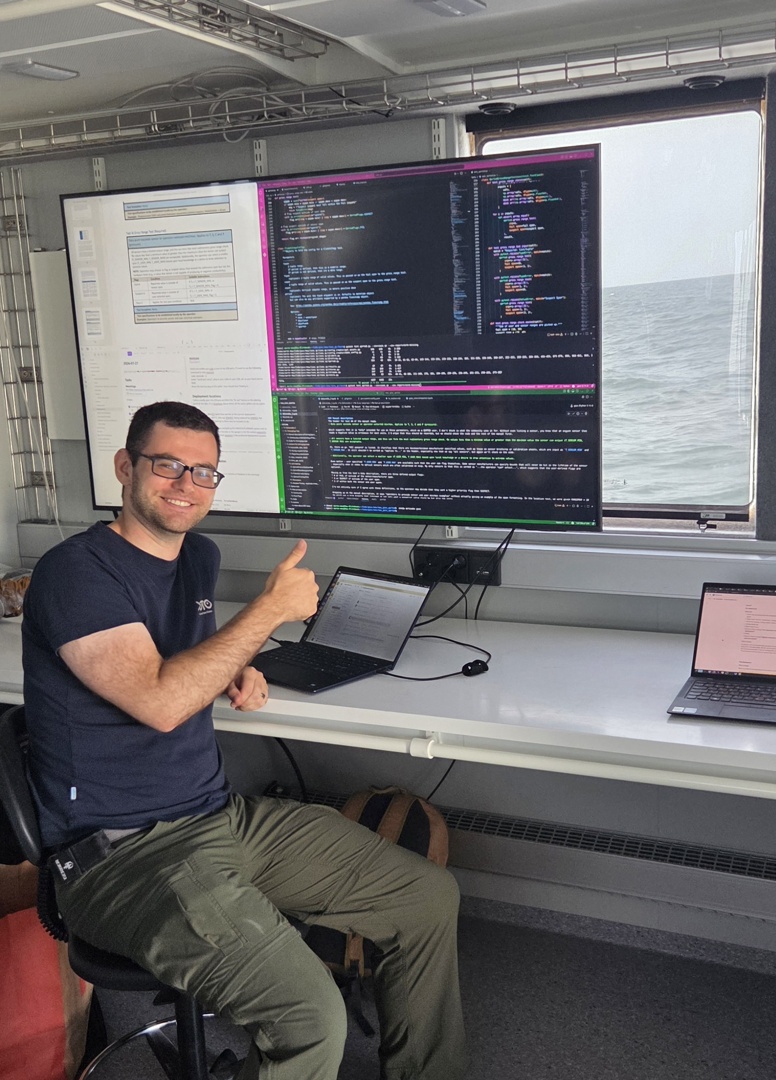
<p><img src="/assets/images/20260731_102534.jpg" alt="Map" title="Doing GSoC on a glider deployment in the Baltic" /></p>

<p>And we’re having fun, which should count for something!</p>]]></content><author><name>Aaron Mau (he/him)</name><email>aaron.mau@voiceoftheocean.org</email></author><category term="blog" /><category term="learning" /><category term="programming" /><summary type="html"><![CDATA[QARTOD is going to Canada.]]></summary></entry><entry><title type="html">GSoC 2: Electric Boogaloo</title><link href="https://klankers.github.io/blog/gsoc-2/" rel="alternate" type="text/html" title="GSoC 2: Electric Boogaloo" /><published>2026-07-20T00:00:00+00:00</published><updated>2026-07-20T00:00:00+00:00</updated><id>https://klankers.github.io/blog/gsoc-2</id><content type="html" xml:base="https://klankers.github.io/blog/gsoc-2/"><![CDATA[<p>Sometimes, you just need to know when to quit.</p>

<p>And I don’t mean from a project perspective. Well, I do, but not entirely in that regard.</p>

<p>See, there are a handful of “required tests” that are listed in the <a href="https://cdn.ioos.noaa.gov/media/2017/12/Manual-for-QC-of-Glider-Data_05_09_16.pdf">IOOS Glider Quality Control Manual</a>. Some of them aren’t implemented. The <code class="language-plaintext highlighter-rouge">syntax</code> test was one of them, as there are so many different ways that such a test could be implemented. This entry talks a little bit about how I started exploring what seemed like a simple test, and slowly learned a lot more computer science than was appropriate for everyday glider quality control.</p>

<p><em>Disclaimer: I’m not an expert on this, and much of this entry is paraphrased from my notes across multiple days. If you’re curious to learn more about this journey - see my <a href="https://github.com/Klankers/mau_gsoc_qartod/blob/main/deliverable_2.ipynb">GSoC notes here</a>.</em></p>

<p>Let’s run through the definition of the test on page 10 of our 2016-version of the manual:</p>

<blockquote>
  <p>Test 2) Syntax Test (required)</p>

  <p><strong>Check to ensure that the message is structured properly</strong></p>
</blockquote>

<p>I’m already worried about this one. The use of the word “message” rather than “data” or some other message suggests that this is handling something abnormal. Like a <a href="https://en.wikipedia.org/wiki/Network_packet">message packet</a>. Most users of the IOOS Toolbox are likely to be people that just want to quality control their data and they may not have access to the “message”-level data that preceeds all the science units.</p>

<blockquote>
  <p>Received data message (full message) contains the proper structure without any indicators of flawed transmission such as parity errors.
Possible tests are: a) the expected number of characters (NCHAR) for fixed length messages equals the number of characters received (REC_CHAR), or b) passes a standard parity bit check, cyclic redundancy check (CRC), etc.
Many such syntax tests exist, and the user should select the best criteria for one or more syntax tests.</p>
</blockquote>

<p>This is concerning, as someone that wants the QARTOD toolbox to be as complete as possible. This paragraph goes a step further, describing the message as a “full message” and clarifies that this test is indeed, intended for transmission tests.</p>

<p>Fortunately, it outlines what the requirements for such a test would be. It defines <code class="language-plaintext highlighter-rouge">NCHAR</code> and <code class="language-plaintext highlighter-rouge">REC_CHAR</code> as lengths of characters that should be received. Perhaps <code class="language-plaintext highlighter-rouge">REC_CHAR</code> is assigned programmatically, perhaps it’s done manually. Whatever the case, the manual is <em>outlining</em> this test. Well, the first of two. Next, it introduces running binary-level checks: <a href="https://en.wikipedia.org/wiki/Parity_bit">A standard parity bit check</a> or a CRC (<a href="https://en.wikipedia.org/wiki/Cyclic_redundancy_check">cyclic redundancy check</a>). As it turns out, the parity bit check is a subset of the CRC.</p>

<p>We’ll get back to the <strong>CRC</strong> check later. There is still more to unpack here. The manual then says “Many such syntax tests exist…” and that the user “…should select the best criteria [themselves] for one <em>or more</em> syntax tests”. This assumes a lot of the user of the QARTOD toolbox. First, that the user will <em>know</em> what to do with binary data (which is often to pass off to <code class="language-plaintext highlighter-rouge">pyglider</code> or <code class="language-plaintext highlighter-rouge">dbdreader</code> and have it do the scary stuff). That includes knowing how the data is formatted and what all the individual bytes mean. That’s easier said than done. There are many manufacturers that skip the raw step and provide their users with scientifically-valid, human-readable ASCII. I was able to find a <a href="https://github.com/kerfoot/slocum-utils/blob/master/doco/dbd_file_format.txt">description of the raw data</a> for Slocum gliders, which are used by the majority of operators in the United States, but understanding the doc itself has a certain entry level that is required.</p>

<p>Next, the user needs to know <em>what</em> all the syntax tests are that can be done on binary data and <em>which fits their use case best</em>. I don’t quite know what those are. I’m pretty sure I wouldn’t know <em>or care</em> about those tests as a student, considering how disconnected this would feel from any undergraduate (or even graduate) coursework. I’m familiar with <a href="https://en.wikipedia.org/wiki/MD5">MD5 hashes</a> - a way of quickly checking if data has been modified. <a href="https://jolynch.github.io/posts/use_fast_data_algorithms/">A blog that says to use it at your own risk</a> is one of the first results in my flavor of Google algorithm when I look up the different types of hash tests. Even then, it isn’t entirely clear where this fits into my daily routine as a data analyst.</p>

<p>See, it’s completely possible that these syntax tests don’t belong in the toolbox. Nowadays, it seems like both the Slocum and SeaExplorer gliders transmit data from the glider to the satellite, and then that data is transmitted back to a manufacturer’s data center prior to delivery to the glider’s owner. Something like a CRC or MD5 hash test would apply during one of those data transmission steps, not so much during data processing by a student/tech/analyst. In my brief exchanges with the greater oceanographic glider community, there seem to be few teams that work with the binary files. Most of the parsing is done by Teledyne or Alseamar.</p>

<p><img src="https://www.researchgate.net/publication/339483185/figure/fig1/AS:11431281239647568@1714432705889/Diagram-of-data-flow-from-the-DMON-integrated-in-a-Slocum-glider-to-a-shore-side-server.tif" alt="Map" />
(A borrowed example from <a href="https://doi.org/10.3389/fmars.2020.00100">Baumgartner et al.</a>, highlighting some of what a glider pipeline looks like)</p>

<p>Furthermore, there’s nothing to test. I don’t have examples of glider binaries that fail the CRC test. I know there’s a CRC value assigned the the header of raw Slocum files, but there isn’t a way to test what the file should have been before transmission. It isn’t really emulatable without having the data direct from a glider, and the data direct from a satellite.</p>

<p>Overall, the syntax tests were an interesting rabbit hole.</p>
<ul>
  <li>Why was there no code in the toolbox for such a test?
    <ul>
      <li>Most users don’t know what it means, or how to use it, considering they don’t have examples or work with that form of the data.</li>
    </ul>
  </li>
  <li>Why didn’t the glider community agree on what it was?
    <ul>
      <li>Different manufacturers have different instructions. At the IOOS GDAC, there are dozens of different sensors which lead to different configs and no two data collections will be exactly the same. As such, it’s hard to automate or define in general.</li>
    </ul>
  </li>
  <li>Why was it so hard to get examples of glider binary files?
    <ul>
      <li>The types of tests described in the glider manual take place earlier in the data pipeline than most users would have access to. They’re done by the manufacturers in automated routines coded up by experienced engineers. Perhaps this step <em>used</em> to be more appropriate, considering how telecommunications and AUV technology has advanced since the manual was written. The dearth of “raw” data files speaks for how few users have access to them.</li>
    </ul>
  </li>
</ul>

<p>It all came down to a lot of sleuthing which mandated some networking with other glider experts. It was ultimately a handy endeavour, however, to better understand the data flowpath and see where the QARTOD toolbox fits in said flowpath. Perhaps this can be of help for the IOOS Glider committee, should the manual be updated for its 10-year anniversary.</p>]]></content><author><name>Aaron Mau (he/him)</name><email>aaron.mau@voiceoftheocean.org</email></author><category term="blog" /><category term="learning" /><category term="programming" /><summary type="html"><![CDATA[Sometimes, you just need to know when to quit.]]></summary></entry><entry><title type="html">Underwater Glider Workshop 2026</title><link href="https://klankers.github.io/blog/ug2/" rel="alternate" type="text/html" title="Underwater Glider Workshop 2026" /><published>2026-07-07T00:00:00+00:00</published><updated>2026-07-07T00:00:00+00:00</updated><id>https://klankers.github.io/blog/ug2</id><content type="html" xml:base="https://klankers.github.io/blog/ug2/"><![CDATA[<p>Ok, admittedly this is a little late but I feel like I should at least put <em>something</em> up.</p>

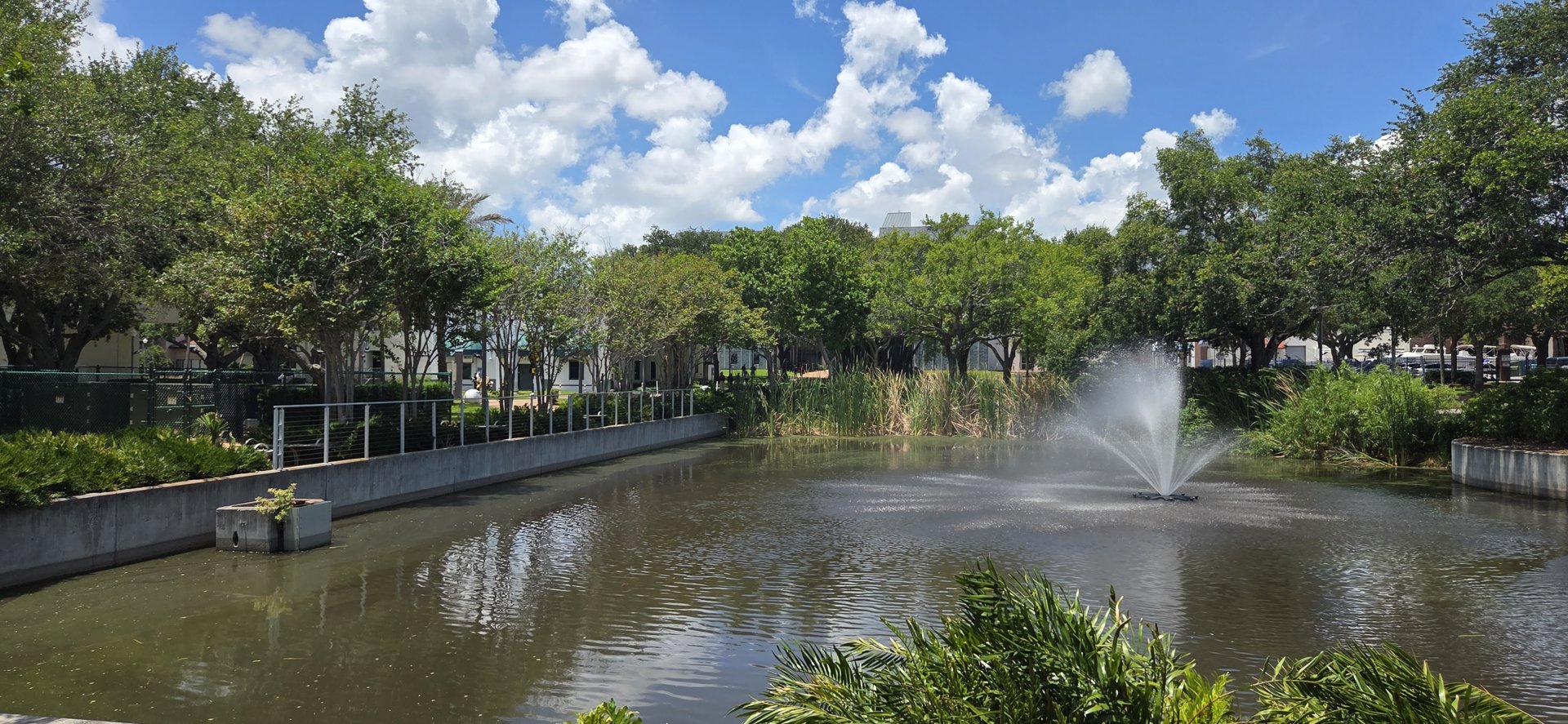
<p>The <a href="https://underwatergliders.org/ug2-workshop-st-pete-florida-26/">Underwater Glider Workshop</a> (it was a conference) took place this year in St. Petersburg, Florida. It was from May 18-20 right on the University of South Florida campus. This was a couple of weeks after a devastating fire at the campus destroyed the local <a href="https://www.usf.edu/news/2026/050326-update-on-structure-fire-in-msl-building-on-usf-stpetersburg-campus.aspx">marine sciences lab</a>, something which both workshop attendees and <a href="https://www.fox13news.com/news/usf-marine-science-research-destroyed-st-pete-lab-fire-caused-lightning-strike">the news</a> confirmed to be causted by a lightning strike. The old marine sciences lab had a historical wooden roof, mostly kept for aesthetics purposes, which unfortunately was highly flammible. A ballasting tank, pressure calibration bench, servicing benches, tools, and parts were destroyed in addition to much of the structure. However, Chad Lembke clarified that not all was lost - two gliders were found buried under the rubble and were able to be powered on! The most important thing was that no one was hurt and the department will be able to keep moving.</p>

<p><img src="/assets/images/20260518_131651.jpg" alt="USF campus" title="The University of South Florida campus" /></p>

<h2 id="day-1">Day 1</h2>

<p>There was a lot to like during the first day. At VOTO, we’ve very proud of our 5-year timeseries in the Baltic Sea. We’ve managed near-continuous observations <a href="https://observations.voiceoftheocean.org/">at multiple sites</a> and it has understandably been quite a bit of work. It was then humbling, however, to hear about multidecadal projects in the <a href="https://gliders.cicese.mx/">Gulf of Mexico</a> or off the <a href="https://spraydata.ucsd.edu/projects/cugn/">coast of California</a>. It’s a reminder that gliders have been around for a long time and the field has had to evolve continuously. Eventually, VOTO will be there and when we are, we’ll have lots to talk about. There was an emerging theme in the upcoming <a href="https://oceangliderscommunity.github.io/OG-format-user-manual/OG_Format.html">OG1.0 format</a>, which seeks to homogenize glider data. It’s kinda like the standardization of cell phone chargers. For years, you couldn’t plug and play between Android and iPhone. Or even multiple years of iPhone - it seemed like the charger would change on a whim and it was anti-consumer. When <a href="https://www.scrippsnews.com/science-and-tech/the-end-of-cable-clutter-apple-adopts-usb-c-for-iphone-15">Apple adopted USB-C</a> a few years back, it was described as something “already universal” and “the same cable can charge Mac, iPad, iPhone…”. OG1.0 will take the “spaghetti” of different glider formats and make them play nice together. All of a sudden, I can use data from other labs without being trained in how a specific type of data works. And the community is really excited about that, too. Metadata standards will help provide context to the data that people have. Flagging methods will be clarified, such that it’s easy to ID which data points are defined as good or bad. I won’t have to worry about if my temperature data is called “TEMP” or “temp_c” or “t1” across different datasets. Seeing this makes me wish that there was a similar standard for CTD data. Working in the IAPSO CTD-O2 workgroup, this can be a sticking point. CTDs predate Gliders by about 20 years and, though they don’t collect as much data in general, they are the best way to produce high-quality data. A CTD requires an operator, and said operator can then make post-fit corrections using Niskin bottle samples. That’s harder to do with a glider, since it’s remotely operated and corrections are a challenge given spatiotemporal variability. Yet, there is no standard for CTD data. CTD manufacturers have come and gone over the years, with the original Neil Brown MkIIIs evolving into the ubiquitous SBE9 manufactured by SeaBird, yet there hasn’t been such a standard. Sometimes your CTD data is a frequency. Sometimes it’s in an old standard. If you use different datasets, you most likely will need to do some kind of homogenizing step to get everything to talk together.</p>

<p>But I digress. Day 1 was a lovely introduction to the UG2 sphere which I’ve only really experienced through the narrow lens of their Slack channel.</p>

<h2 id="day-2">Day 2</h2>

<p>Day 2 was very different. At this stage, we were able to explore a little more related to where the field is going and what some of the major developments have been. AI has become an incredibly common topic and it’s arguably more divisive now than ever. In 2023, I couldn’t count on AI to count to 10 much less be able to create tools for filtering 20 years of bioacoustic data. Yet during the workshop, it was demo’d in real-time. We were able to listen to the raw data, noisy as it was, and we could tell that there were porpoise calls in there. Then with a single press of a button, a 20-second AI-built toolbox managed to filter all the noise out, ID features of interest, and generate a report on what it found. Basically, it took the work of a team of undergrads working for 3 months, painstakingly flagging regions of whale calls and figuring out filter parameters, and condensed all the work into 20 seconds and maybe $2 worth of AI tokens. Of course, developing the tools themselves takes a lot more effort than that. But I was introduced to AI <em>teams</em>, where one AI agent was assigned a certain role and another agent would then check on them. So this whole <em>team</em> of robots was responsible for writing the 5000+ lines of code that were paired with acoustic data which, given funding and manpower constraints, hadn’t been touched in years. That demo highlighted:</p>
<ul>
  <li>As our data gets bigger, it will become incresingly impossible for humans to handle it all manually.</li>
  <li>Regardless of which tool you use, you need to think critically. I intend to keep an open mind, but not so open that my brain falls out.</li>
  <li>AI is great for small teams, either in manpower or funding, to build pipelines or routines that lead to higher-quality products.</li>
</ul>

<p>It was similar to an example from Ocean Sciences, where the NOAA tide gauges were tied to an AI agent which could then summarize key findings or provide data products that non-experts could use. While a scientist or data tech could just as easily do that with more detail, the <em>ease</em> of which a simple question can be asked is incredibly powerful.</p>

<p>Of course, the questions following the demo showed just how divisive the use of AI is and the number one fear is atrophy. I’m working through the Google Summer of Code, where I’m learning how to be a better programmer. It’s extremely, extremely tempting at times to just pass a prompt off to Claude or something and have it write my code for me. But that defeats the whole purpose of the project. And what’s more, it actively hurts my ability to code. It can be an excellent learning tool if used correctly, and it can also do some things that you don’t have time for, but there is a time and a place for this tool like any other. Building a house with <em>only</em> a hammer isn’t the same as having the whole toolbox. AI is kinda like a Swiss-army knife that fits a lot of applications, but it’s still a tool. I wouldn’t use it over a hammer, or a crimper, or an impact driver if those other tools are available.</p>

<p>That’s something I’ve noticed since living in Sweden, which is that Europe as a whole sees it more like a tool. It isn’t quite vilified the same way. Certain tools, like video or image generation are, but when it comes to coding or writing it’s seen as a way to break down barriers. The “I don’t know how to get started on this” question can be hard to answer from search engine queries alone. Of course, the environmental impact of AI is commonly brought up among our group since we, as an environmentally-minded company should be. It’s one of those tools or topics that <em>should</em> require training on. Like playing a game of CIV - this unit could be overkill for what I intend to accomplish and the rest of my civilization may be neglected if I decided to use it instead. Again, use your brain.</p>

<h2 id="day-3">Day 3</h2>
<p>The conference wrapped up with some encouraging talks. I think the one I was most happy to hear about was the <a href="https://www.ocean.washington.edu/story/Student_Seaglider_Center">student-led glider lab at the University of Washington</a>. I worked with Sasha Seroy and Miles Logsdon when I was an undergraduate and it’s cool to see that she and Rick Rupan have managed to create a self-sustaining student ecosystem that is able to collect meaningful data. The students themselves ask the scientific questions, they consult with “stakeholders” or those that would benefit from getting data in a particular location, and they oversee the needs to deploy in specific areas.</p>

<p>Thus far, it seems like they have 8 donated seagliders (the kind built by Charlie Eriksen and Fritz Stahr) with <a href="https://uwstudentseaglidercenter.com/news/">business, technical, and science teams</a>. Because it’s an undergrad operation, there’s heavy student turnover and <em>training</em> has been a key aspect of the center. I think there is a lot to be learned from this and, given the relationship between VOTO, the University of Gothenburg, and Chalmers University here in Gothenburg, I could see something similar emerging. Mariarita at IFREMER sounded interested in putting something similar together in Europe.</p>

<p>Given how much the students have accomplished (they’re continuously adding to the <a href="https://mailchi.mp/ba644985e9d9/uwssc-9516955">OTTERS timeseries</a> across Puget Sound) with a limited budget, driven almost entirely by student engagement and donations, it reminds me of the legacy hardware I had around me at Scripps. SIO has always been at the forefront of some kind of ocean research, but what do you do with equipment when it becomes antiquated? When that new, fancy budget rolls through to use the new sensors with an extra order of accuracy. The UW Glider center shows that the old stuff is still perfectly useable and with a good mentor can be given a second life. At SIO we had dozens of old-style Niskin bottles that were no longer usable for our GO-SHIP cruises, as they were 1) too heavy or 2) required niche tools or parts to maintain. We put a post in the SIO listserv that we had Niskin bottles available, and we got a large amount of interest from different groups. One was the Birch Aquarium, which wanted them for a display. Another was a grad student that wanted to take samples the old-fashioned way (with a messenger traveling down the line). And another was from someone that worked with Sir David Keeling’s lab - they still had these types of bottles and were ready to expand their inventory. I think of the alternative - sending the bottles to the dump or campus recycling center and it makes me shudder somewhat to think about the missed opportunities. That happened, as far as I’m aware, with the <a href="https://www.whoi.edu/what-we-do/explore/underwater-vehicles/towed-vehicles/seasoar/">SeaSoar</a>. The SeaSoar was a towed CTD, kind of like a tow-yo, that had fins and specialized on occupying a certain depth. It was a monster to maintain - there were numerous stories and boxes of <a href="https://en.wikipedia.org/wiki/Cable_fairing">cable fairings</a> that highlighted how much work went into maintaining the device. When I was hired on, we had two complete SeaSoars on site, with additional parts, oil, and deployment equipment that took up nearly a room in and of itself. They were getting phased out at WHOI and OSU, so we had boxes with labels for the various labs they had once occupied. SIO has a smaller vessel, the Bob and Betty Beyster, which may be too small for SeaSoar operations, but there are examples of citizen scientists going around and taking measurements. I wonder if, on a larger scale and outside of the beaurocracy of the University of California, these SeaSoar units could have found a second wind in the way that the UW glider lab has.</p>

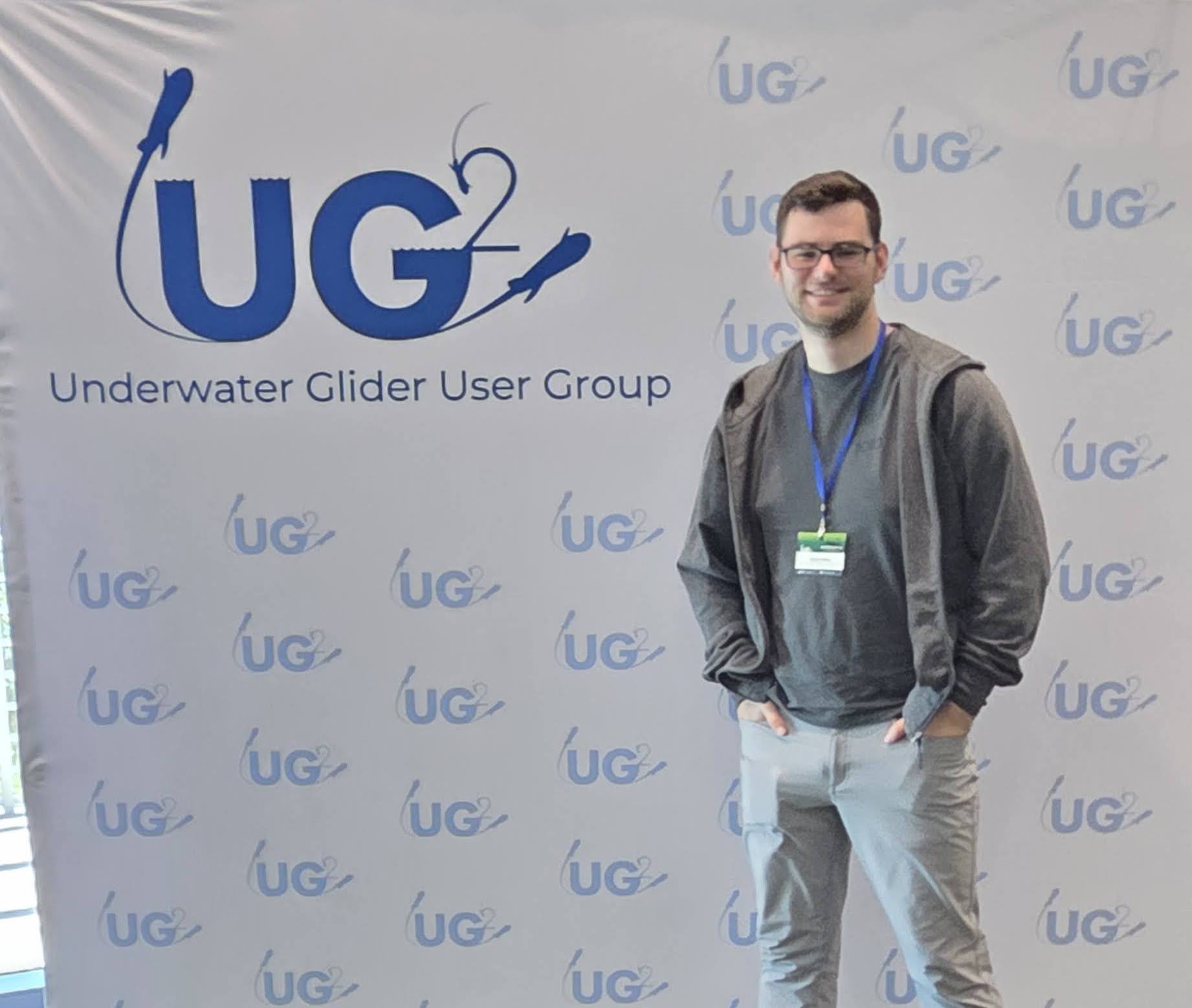
<p><img src="/assets/images/20260520_131054.jpg" alt="portrait" title="Pics or it didn't happen" /></p>]]></content><author><name>Aaron Mau (he/him)</name><email>aaron.mau@voiceoftheocean.org</email></author><category term="blog" /><category term="meetings" /><summary type="html"><![CDATA[Ok, admittedly this is a little late but I feel like I should at least put something up.]]></summary></entry><entry><title type="html">Google Summer of Code</title><link href="https://klankers.github.io/blog/gsoc_start/" rel="alternate" type="text/html" title="Google Summer of Code" /><published>2026-06-04T00:00:00+00:00</published><updated>2026-06-04T00:00:00+00:00</updated><id>https://klankers.github.io/blog/gsoc_start</id><content type="html" xml:base="https://klankers.github.io/blog/gsoc_start/"><![CDATA[<p>We’re all aboard the coding train with the Google Summer of Code.</p>

<p>What do you do when you code like you’re from the Nordics?
My entire scientific career I’ve been programming with my blinders up - not really contributing to other packages or toolboxes.
In part, I’m very driven on my own work, more so than maintaining or improving the work of someone else.
But primarily, it’s trepidation.
A subconscious avoidance of any kind of potentially unwanted interaction that could be taken as fear or cowardace.</p>

<p>Google Summer of Code seeks to break that down.</p>

<p>The world, believe it or not, runs on open-source.
Without Linux, server infrastructure wouldn’t be half of what it is.
Wikipedia is open to all and transparent about everything with a hearty community of editors that make the pages good enough to cite (though the ‘never believe wikipedia’ ethos of my childhood still has some validity).
Millions of actions go thanklessly throughout the world’s cyberinfrastructure to keep things running and safe.</p>

<p>One of those open-source projects belongs to the <strong>U.S. Integrated Ocean Observing System</strong>, or <strong>IOOS</strong>.
They developed the <strong>QARTOD</strong> (Quality Assurance/Quality Control of Real Time Oceanographic Data) toolbox, which is used by many groups for various ocean observing platforms today.
However, it’s one of those cases where it serves a greater community and only volunteers can normally maintain, enhance, or assess it.
Until GSoC came along.</p>

<p>In oceanography, it can be hard to build up both the interdisciplinary science background to know <em>what to do</em> as well as the engineering wisdom to know <em>how to best do it</em>.
In my career, my work has very rarely seen the light of day or been ready for someone else to take over if I had an accident.
It was always for internal use.
I’ve been missing the wisdom to become a ‘unicorn’ of sorts that can maintain scientific toolboxes built by our predacessors.
I work with some incredibly talented people now that are unicorns - they look around online, find something that fits their use case, and they use it.
But furthermore, they get involved.
They make pull requests.
They sit in on meetings.
It’s important to them because it’s important to the community.
That’s where I want to be.</p>

<p>I applied for the GSoC project idea as listed in <a href="https://github.com/ioos/gsoc/issues/102">GitHub GSoC 102</a> after a suggestion by one of the unicorns in my group.
The application required a number of different things.
First, to get familiar with the QARTOD aspect of the <code class="language-plaintext highlighter-rouge">ioos_qc</code> toolbox and tinker a little.
My ability to read code and use the package would be a mandatory aspect of applying.
Next, I needed to write a proposal.
This consisted of:</p>
<ul>
  <li>Technical description of the work to be done.</li>
  <li>Statement of intent during the community bonding period.</li>
  <li>A schedule of deliverables.</li>
  <li>A description of documentation, demonstrating learning.</li>
</ul>

<p>According to the requirements listed in the project idea, I was able to put together the following timeline using the Google <a href="https://developers.google.com/open-source/gsoc/timeline">due dates</a>:</p>

<table>
  <thead>
    <tr>
      <th>Stage</th>
      <th>Stage specifications</th>
      <th>Time required</th>
      <th>Start-End</th>
    </tr>
  </thead>
  <tbody>
    <tr>
      <td>1</td>
      <td>Learn about the community and note shortcomings or additional toolboxes, such that the wheel need not be reinvented.</td>
      <td>3 weeks</td>
      <td>May 1 - May 24</td>
    </tr>
    <tr>
      <td>2</td>
      <td>Begin test assessments and complete Group 1 “required” tests.</td>
      <td>4 weeks</td>
      <td>May 25 - June 21</td>
    </tr>
    <tr>
      <td>3</td>
      <td>Complete Group 2 “Strongly Recommended” tests.</td>
      <td>2 weeks</td>
      <td>June 22 - July 5</td>
    </tr>
    <tr>
      <td>4</td>
      <td>Complete Group 3 “Suggested” tests.</td>
      <td>3 weeks</td>
      <td>July 6 - July 26</td>
    </tr>
    <tr>
      <td>5</td>
      <td>Explore other tests and finalize documentation.</td>
      <td>3 weeks</td>
      <td>July 27 - August 16</td>
    </tr>
  </tbody>
</table>

<p>This is all before the final week of GSoC, wrapping up the week of August 17th.</p>

<p>The proposal process wasn’t difficult - once I knew my mentor it was a slam dunk.
However, it is easy to get discouraged.
The world is filled with zealous computer-science majors.
Folks that are innately talented with the coding practices and theory to effortlessly make big contributions.
Weeks before I got my proposal in, I saw numerous pull requests going into the repository that I was applying to help with.
Admittedly, some of them were written by AI.
Others appeared misguided or needed work.
But they were showing incredible initiative by simply making the contributions, to show that they knew how the codebase worked.
Meanwhile, I was sitting back in my sheltered mindset doubting myself.
<em>How can I compete with this guy, who strung together 20 well-organized commits and created a PR with no errors?</em>
<em>I can’t act as efficiently as they can.</em></p>

<p>In my case, though, my application wasn’t in too much doubt.
But it was reassuring to hear from my mentor that the goal of GSoC isn’t to create some S+ tier product (though that’d be nice).
It’s to create unicorns.
Many of the other applicants are looking to add GSoC to their resume but in the long run, it’s unlikely that they’ll get an oceanography degree to really be able to engage with the user base.
Meanwhile, this is a package that I hope to use in my workplace.
It’s relevant to me.
It’s relevant to the community that I want to support.</p>

<p>So far, I’ve learned a lot.
About the community.
About the history of the software that I’m looking to assess and improve.
I’m picking up some of the street smarts that will (hopefully) make me a good collaborator and responsible coder.
I’m coming into this as a person with basic coding skills to get experience.
Don’t be discouraged from engaging with your community - the world is full of work to do and too few hands to do it.
If we work together, the load is lighter.
And when it comes time to pass a torch, transparency and education prepare the next generation to make it bigger and better than it was before.</p>]]></content><author><name>Aaron Mau (he/him)</name><email>aaron.mau@voiceoftheocean.org</email></author><category term="blog" /><category term="learning" /><category term="programming" /><summary type="html"><![CDATA[We’re all aboard the coding train with the Google Summer of Code.]]></summary></entry><entry><title type="html">Ocean Sciences ‘26</title><link href="https://klankers.github.io/blog/osm/" rel="alternate" type="text/html" title="Ocean Sciences ‘26" /><published>2026-03-02T00:00:00+00:00</published><updated>2026-03-02T00:00:00+00:00</updated><id>https://klankers.github.io/blog/osm</id><content type="html" xml:base="https://klankers.github.io/blog/osm/"><![CDATA[<p>Ocean sciences took off and had their first meeting outside of the United States: In Glasgow.</p>

<p>I’m a huge fan. Especially considering the recent move. It served as an excellent venue to link together so many different groups from around the world. Glasgow is also a city with a strong maritime history and has built a big international community.</p>

<p>I started by heading up to Aberdeen, in the Northeast of Scotland. I belong to a workgroup that works on CTD-O2 methods and it was the first time that we would all be in the same country, let alone the same timezone. We have people in Australia, the U.S., and Europe, so even meetings can be hard to schedule. Aberdeen is a city moulded by the sea, so it was fitting to start the 10-ish days in Scotland there. After 72 hours of seagulls, I headed south to Glasgow via Fife and Edinburgh. Something that surprised me: Scottish rail is <em>excellent</em>. I loved it. From getting a ticket, to simply riding the train, everything was stress free and easy. Sure, the trains are not cleaned after turning back around so trash can kind of build up inside, but a 3-hour train for £30 was worth it. Edinburgh to Glasgow is also like £15, which is super reasonable considering the ride is 45 minutes.</p>

<p>Glasgow is the working man’s city of Scotland. Not as pretty as Edinburgh. Not as hardy as Aberdeen. But boy, was there a lot to see and do. It’s certainly busier than those other places. We stayed just across the river by the science center, maybe a 5-10 minute walk from the Scottish Event Centre. Not bad. However, the hotel had no laundry services and there wasn’t a convenient option outside of the event hours, so I was left to do laundry in the sink. But the water didn’t warm and I ended up doing it in the shower. Most of the time in the evenings was spent networking or socializing with people after the various town halls, oral presentations, posters, and plenary talks. So the taps and bar food were flying around the event center. This is where I learned how forward Scots can be. It was very hard to find an empty table, as they aren’t afraid to join you and strike up a conversation. Living in Sweden and growing up in Seattle, this was the <em>opposite</em> of what I wanted after a long day of dense PowerPoint slides. But later, I came to understand and appreciate it.</p>

<p>I wasn’t flying out of Glasgow. I have a friend in Edinburgh and had to say hi, while capitalizing on a cheaper flight. Edinburgh is the capitol, though the population is lower than that of Glasgow. It has a lot more charm and has actually been voted one of the best cities in Europe, if not the world. I can see it - even in February, there was a lot to like. The community feels close-knit and there is good access to nature. I was able to make the hike up Arthur’s Seat, which is an extant volcano, and got a good idea of all the ‘closes’ around the Royal Mile. Closes are narrow alleys that predate many countries, packed with small shops and serving as routes to get away from the main drag. Edinburgh castle was also quite lovely. While Scotland doesn’t have as much history as say, Rome, it does make up for it by 1) being very soap-opera-y and 2) being very well-documented. The museums in Scotland are donation-based, meaning I had free access to see quite a bit of things while I was there.</p>

<p>The next Ocean Sciences will be in 2028 and I hope I can make some good contributions to the global community by then and earn an admission ticket. It looks like it will be in Vancouver, a place I know rather well, though it borders the expanse of the Pacific. It’ll be more than crossing one time zone, that’s for sure.</p>]]></content><author><name>Aaron Mau (he/him)</name><email>aaron.mau@voiceoftheocean.org</email></author><category term="blog" /><category term="meetings" /><summary type="html"><![CDATA[Ocean sciences took off and had their first meeting outside of the United States: In Glasgow.]]></summary></entry><entry><title type="html">Rebuilding the website</title><link href="https://klankers.github.io/blog/rebuilding/" rel="alternate" type="text/html" title="Rebuilding the website" /><published>2025-11-17T00:00:00+00:00</published><updated>2025-11-17T00:00:00+00:00</updated><id>https://klankers.github.io/blog/rebuilding</id><content type="html" xml:base="https://klankers.github.io/blog/rebuilding/"><![CDATA[<p>Huzzah! It has returned!</p>

<p>This post will probably have no obvious time discrepancy from the others, but believe it or not, it marks the first post in about a year. It was mostly laziness, combined with a desire not to put too much miscellany on a new machine. I wrote up a series of posts in markdown in <code class="language-plaintext highlighter-rouge">Obsidian</code> of all places but never cloned my website repo to actually push them because, well, setting up Jekyll locally on Windows and MacOS was something that I knew could take me a whole afternoon.</p>

<p><em>Until now.</em></p>

<p>I’m in a good situation where I’m currently surrounded by Linux users. We’ve got an Ubuntu guy and a KDE developer. We all specialize in Python, but that’s not the main concern. The fact that I’ll be routinely working in Linux means that I might as well reinstall the site and see if I can get it back up and running. It’s good practice and I’ve got folks around me that understand the syntax that’s advanced since Ubuntu… 12.04? It’s been a while, okay?</p>

<p>And oh my gosh, it’s so easy on Linux.</p>

<p>The <a href="https://jekyllrb.com/docs/installation/ubuntu/">Linux instructions</a> for Jekyll are remarkably short. Install Ruby without needing some big installer image. Get all the prereqs with it while you’re at it. Four lines of code for best-practice purposes and wrap it all up by installing the Jekyll bundler. Then I just cloned the old repo, deleted my <code class="language-plaintext highlighter-rouge">Gemfile.lock</code> (as several of them had depreciated and the bundler would be underpinned to something old), rebuilt it using <code class="language-plaintext highlighter-rouge">bundle install</code> and then just ran the old <code class="language-plaintext highlighter-rouge">bundle exec jekyll serve</code>. Easy peasy. No pulling my hair out about figuring out the version of Ruby that comes with MacOS. Don’t need Chruby.</p>

<blockquote style="text-align: center;">
  "It just works." - Todd Howard
</blockquote>]]></content><author><name>Aaron Mau (he/him)</name><email>aaron.mau@voiceoftheocean.org</email></author><category term="blog" /><category term="blog" /><category term="programming" /><summary type="html"><![CDATA[Huzzah! It has returned!]]></summary></entry><entry><title type="html">Ready to move</title><link href="https://klankers.github.io/blog/clairemont/" rel="alternate" type="text/html" title="Ready to move" /><published>2025-11-08T00:00:00+00:00</published><updated>2025-11-08T00:00:00+00:00</updated><id>https://klankers.github.io/blog/clairemont</id><content type="html" xml:base="https://klankers.github.io/blog/clairemont/"><![CDATA[<p>At long last, with many nights of running the dog up and down those hills, I can say that I’ve seen the neighborhood.</p>

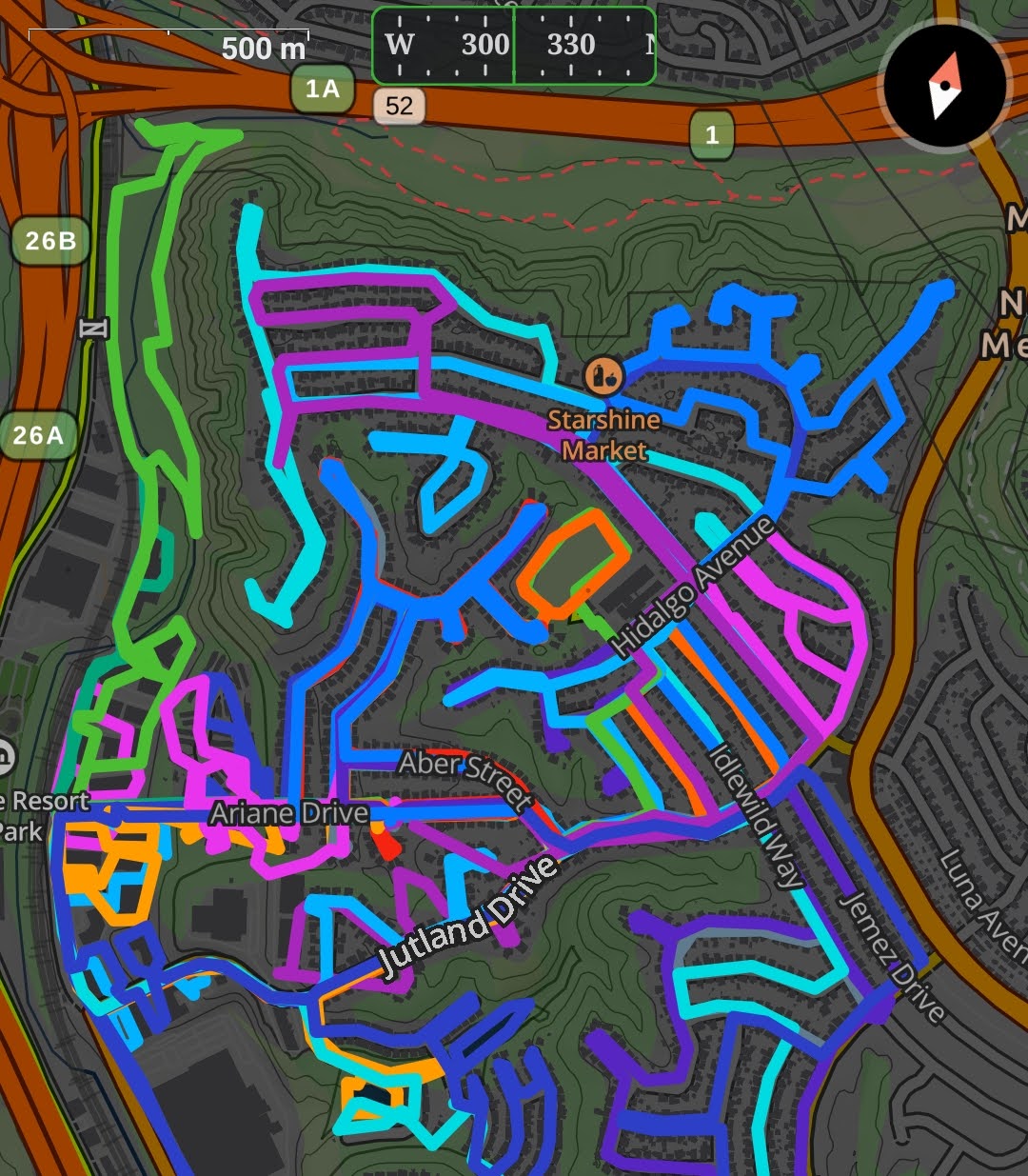
<p><img src="/assets/images/clairemont.jpg" alt="Map" title="Running and dog walking" /></p>

<p>Just in time to move away, too. Boarding a plane very, very soon.</p>]]></content><author><name>Aaron Mau (he/him)</name><email>aaron.mau@voiceoftheocean.org</email></author><category term="blog" /><category term="blog" /><summary type="html"><![CDATA[At long last, with many nights of running the dog up and down those hills, I can say that I’ve seen the neighborhood.]]></summary></entry><entry><title type="html">The Entire Yes Discography</title><link href="https://klankers.github.io/blog/yes-discography/" rel="alternate" type="text/html" title="The Entire Yes Discography" /><published>2025-06-24T00:00:00+00:00</published><updated>2025-06-24T00:00:00+00:00</updated><id>https://klankers.github.io/blog/yes-discography</id><content type="html" xml:base="https://klankers.github.io/blog/yes-discography/"><![CDATA[<p>Imagine listening to 23 albums in a month to pick out maybe 20 minutes of music you recognize.</p>

<p>So I’ve got a friend that serves as a kind of “musical pen pal”. We send each other songs at the end of each month, though sometimes we send each other so much music to listen to that we need quite a bit of time to digest everything the other has suggested. We’ll usually include some YouTube links to a track that we like, maybe one with a music video or lyrics, and describe something about the song that we like. Or dislike. It makes it easy to feel like we’re keeping in touch while also exposing ourselves to the musical curation of another person.</p>

<p>I know he’s really into the British prog band <a href="https://en.wikipedia.org/wiki/Yes_(band)"><strong>Yes</strong></a>. The old prog group that started in ‘69 or so and, surprisingly, is still going today despite there being no members of the original lineup with the band. The guitarist died, vocalist had a soft retirement, drummer died, bassist and keyboardist moved on, but the band itself still released an album in 2023. I know my dad used to play some tracks of theirs, as he likes Yes as well, but I couldn’t really put my finger on any of the particular songs even though I know he’d played them for me growing up.</p>

<p>So I decided to go on a deep dive for my month of June. I decided I’d kill two birds with one stone: I’d send a list of recs to my friend, <em>and</em> I’d check what Yes songs I remembered from my childhood (surprise: I remembered next to nothing). I decided to listen to the <strong><em>entire</em></strong> Yes discography and pull my highlights from each album. Then, I could rank each album next to each other in a kind of tier list and see what I thought about their discography.</p>

<h2 id="begin-album-play-by-play">Begin album play-by-play</h2>

<ul>
  <li><em>Yes</em> (1969)</li>
</ul>

<p>I don’t recognize anything from this one, so my faves are “Yesterday and Today” and “Sweetness”. I actually really like this album - if I were to describe it I’d say that it’s well balanced. Off to a great start!</p>

<ul>
  <li><em>Time and a Word</em> (1970)</li>
</ul>

<p>This is also completely new to me. My faves are “Astral Traveler” and “Time and a Word”, though I like them for different reasons.</p>

<ul>
  <li><em>The Yes Album (1971)</em></li>
</ul>

<p>Faves are weird here, because they’re parts of songs. It’s the last half of “Starship Trooper” flowing into the first half of “I’ve Seen All Good People”.</p>

<ul>
  <li><em>Fragile (1971)</em></li>
</ul>

<p>Definitely a proggier album, I didn’t realize that it literally opens with “Roundabout”. Outside of that, I don’t recognize anything. I think my fave is probably “The Fish”, since it’s funky, has cool use of a xylophone and cowbell, and is such a great segue into another instrumental “Mood For A Day” (which is a close second). I actually think I prefer “The Fish” + “Mood For A Day”, when played together, over “Roundabout”, though “Roundabout” is still a classic.</p>

<ul>
  <li><em>Close to the Edge (1972)</em></li>
</ul>

<p>This is definitely their proggiest album so far, at least by release date, and I’ve definitely never heard this before. “I Get Up, I Get Down” (or “Close to the Edge pt. III”) is good but I think my favorite is “Siberian Khatru”. It’s a genuinely cool sound with funky jams.</p>

<ul>
  <li><em>Tales from Topographic Oceans (1973)</em></li>
</ul>

<p>I take it all back. This is the proggiest. Haven’t heard any of these before, but they all feel distinct from anything so far. It feels like “Ritual” is the most cohesive single song with multiple sections that I like. Each song on this album is around 20 minutes long and by the time I was done with the album I didn’t really know what I had just listened to. Listening to all of it, and attempting to do something else at the same time, turned my brain to scrambled eggs and I was ready for a nap at the end of it.</p>

<ul>
  <li><em>Relayer (1974)</em></li>
</ul>

<p>Never heard this. Love “Sound Chaser”, though the others are great, too! Probably my fave album thus far. They definitely have some great jams on this one without feeling stretched out like on Tales.</p>

<ul>
  <li><em>Going for the One (1977)</em></li>
</ul>

<p>Haven’t heard any of this. Favorite is “Turn of the Century” because of the synths, whereas “Wonderous Stories” gets a nod for the vocals and general mood.</p>

<ul>
  <li><em>Tormato (1978)</em></li>
</ul>

<p>I think at this point there are very few Yes songs that I’ve heard. I know that “Owner of a Lonely Heart” is going to be somewhere in the 80s, but this album is also new to me. I’m surprised by how little I’ve recognized so far. “Onward” is my favorite from this album.</p>

<ul>
  <li><em>Drama (1980)</em></li>
</ul>

<p>Not my favorite album of theirs, but I do like the funky, poppy vibes of “Does It Really Happen?”. On a second listen of a few tracks, it isn’t entirely obvious that Trevor Horn (of the Buggles) is the vocalist. Very similar to Jon Anderson.</p>

<ul>
  <li><em>90125 (1983)</em></li>
</ul>

<p>I found it! The album with “Owner of a Lonely Heart” on it! Just like “Roundabout”, I’m surprised that this opens with the big single. I also recognize “It Can Happen” - a song that I’ve had stuck in my head for years and couldn’t confirm if it was by Yes or not. It’s so satisfying to finally know where this is from. Then I heard “Changes” and I was like “I recognize this, too”. Anyways, this is probably my favorite album so far (even though it’s got a lot of stereotypical 80s pop elements). I think my favorite is “Changes”. This track is just too good - the intro/closing on the xylophone and big guitar sounds are so epic.</p>

<ul>
  <li><em>Big Generator (1987)</em></li>
</ul>

<p>I haven’t heard this album and I don’t know if I like it or not. Songs like “Big Generator” and “Shoot High Aim Low” are memorable but not because I liked them. “Final Eyes” is probably my favorite from the album, though “I’m Running” is also quite fun.</p>

<ul>
  <li><em>Union (1991)</em></li>
</ul>

<p>“Lift Me Up” and “Miracle Of Life” are the standouts. I think Yes has adopted more of a pop sound at this point (or should I say, they’ve adopted new instrumentation and radio-friendly tracks), but they’re still making it into their own. I guess this album had a troubled history.</p>

<ul>
  <li><em>Talk (1994)</em></li>
</ul>

<p>This is pretty solid as far as albums go. I like how it’s less poppy, even though it definitely still is, but it feels more like their pre-80s work and actually has a really heavy feel. My fave is probably “Walls”, which is probably some of the easiest listening of the album. My notes for this album just say “Heavy!”.</p>

<ul>
  <li><em>Keys to Ascension (1996)</em></li>
</ul>

<p>I think this and part 2 are live albums with some new material speckled inside. I guess I just have to choose between “Be The One” and “That, That Is”, in which case I think I’ll go with the latter. Neither is amazing in my mind.</p>

<ul>
  <li><em>Keys to Ascension 2 (1997)</em></li>
</ul>

<p>Yeah, the first half of each album is from when Yes played in San Luis Obispo in ‘96. I think my favorite bit of new material from this album is “Sign Language”, an instrumental at the end of the second side, though this album is better than K2A part 1.</p>

<ul>
  <li><em>Open Your Eyes (1997)</em></li>
</ul>

<p>I really liked this album - it has a mood of optimism about it. I heard the hit single “Open Your Eyes” and was very impressed, though my favorite might be “Love Shine”. It’s poppy, with a prog zing to it. Overall, this album features more harmonica and folky influences, though it is still good overall.</p>

<ul>
  <li><em>The Ladder (1999)</em></li>
</ul>

<p>This album may take a few more listens to really understand - the tone goes all over the place in the beginning. My favorite though is probably “To Be Alive (Hep Yadda)”, which has a really satisfying start and fade out.</p>

<ul>
  <li><em>Magnification (2001)</em></li>
</ul>

<p>Again, this one’s new to me but this is also the last album I’d have really expected to hear around the house as a kid (based on release year). It’s got a lot of orchestral aspects to it and it’s definitely an album full of love songs, but for whatever reason “Don’t Go” moved me to tears (even though it’s a little goofy). I feel like Anderson’s vocals have always had some sort of optimism or curiosity in them such that, hearing the stories of breakup in this song, his voice comes across as complete bewilderment. It’s like the lover was self-destructive or allowed life to run them down, and didn’t reach out for the love they needed. The ‘uplifting’ tone of the song only adds to the underlying sense of pain, confusion, and remorse to a certain extent in the lyrics (at least how I interpret the chorus). I don’t know - the rest of the album is all about love and “if we were flowers we’d worship the sun” optimism, but this track comes in really early on and all of the recent Yes I’ve listened to so far just fell apart in sub-5 minutes. The way one half of this relationship desperately wants to stay together, but is allowing them to go if they need to. I decided to look it up after listening to it and Anderson wrote the song about his relationship with his daughter, but I don’t know much more about it.</p>

<ul>
  <li><em>Fly from Here (2011)</em></li>
</ul>

<p>So this was Yes’ first album without Jon Anderson on vocals and it seems like it was written by a different cast of characters. It certainly feels different in tone and sound, especially since it’s 10 years since <em>Magnification</em>. I think my fave track is “Hour Of Need”, which has a variety of different vocals and some nice guitar parts on it.</p>

<ul>
  <li><em>Heaven &amp; Earth (2014)</em></li>
</ul>

<p>I really like “The Game”, particularly the guitar intro and the ethereal backing vocals. Otherwise, it still feels a little like they’re finding their feet with the new lineup.</p>

<ul>
  <li><em>The Quest (2021)</em></li>
</ul>

<p>I think I’m satisfied with The Quest relative to the other more recent albums - it feels like they’ve settled into the new lineup and they have their flower power back. A standout song that speaks to me is “A Living Island” - perhaps the first Yes song that feels a little like a warm blanket. I also think “The Ice Bridge” and “Future Memories” are good.</p>

<ul>
  <li><em>Mirror to the Sky (2023)</em></li>
</ul>

<p>Last album of the month and I think I’ve noticed a propensity to have my fave track be the last on the album. “Circles Of Time” hits differently from anything else on the main disc (for the bonus disc, I think “One Second Is Enough” is my favorite).</p>

<h2 id="post-list-discussion">Post-list discussion</h2>

<p>Sure enough, I only recognize songs from two albums - <em>Fragile</em> (“Roundabout”) and <em>90125</em> (“Owner of a Lonely Heart”, “It Could Happen”, “Changes”). That was a huge surprise to me, considering they have 23 studio albums released as of 2025. I guess the singles that get airtime have never stuck in my mind, though, as a prog band, I wouldn’t expect them to get as much air time as say, Van Halen or MJ. There is still a <em>huge</em> amount of good music in there that I hadn’t heard before, though.</p>

<p>There were several albums that I could see myself buying. <em>Fragile</em> is the most obvious one to start with but <em>Relayer</em>, which came out a year or two later, is also solid. Pairing with <em>90125</em>, I like their ‘97 album <em>Talk</em> and ‘01s <em>Magnification</em>, even though the latter doesn’t have as much quality on it.</p>

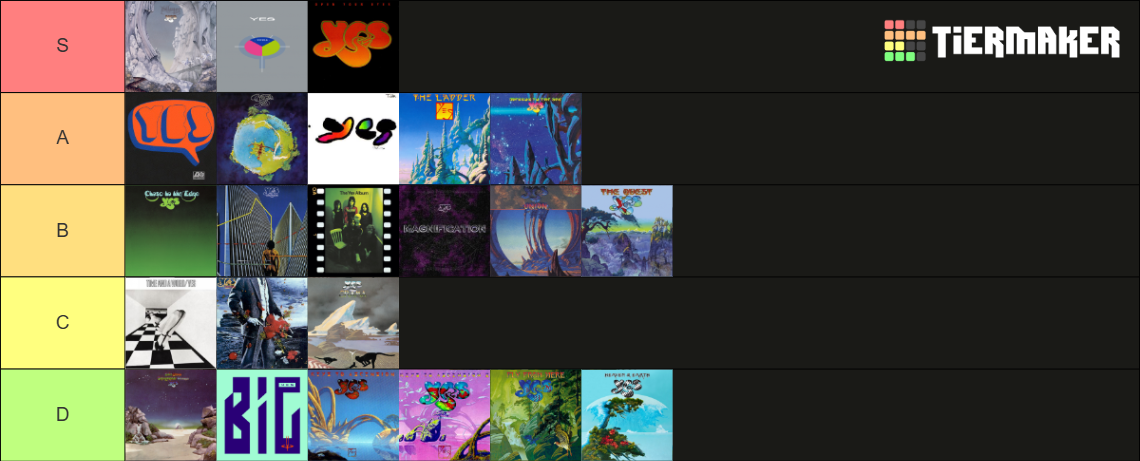
<p><img src="/assets/images/Yes-tiers.png" alt="Yes tier list" title="My Yes tier list" /></p>

<p>I feel like Yes is a Bactrian two-hump camel of quality. They hit it off early, with nonstop classic prog hits (<em>Time and a Word</em> - <em>Relayer</em>) until the next hump of 80s pop-prog (<em>90125</em> - <em>Talk</em>).</p>

<p>But yeah, I was surprised to enjoy some of their discography as much as I did. I think of King Crimson and Jethro Tull as big prog weird stuff, but Yes had a lot of pop and space rock. I was sitting around playing <em>Tank Mechanic Simulator</em> for a good chunk of June and it was actually very relaxing to just listen to the latest Yes album as I pieced together my 3rd <a href="https://en.wikipedia.org/wiki/Vickers_6-ton">Vickers E</a>.</p>]]></content><author><name>Aaron Mau (he/him)</name><email>aaron.mau@voiceoftheocean.org</email></author><category term="blog" /><category term="media" /><category term="music" /><summary type="html"><![CDATA[Imagine listening to 23 albums in a month to pick out maybe 20 minutes of music you recognize.]]></summary></entry><entry><title type="html">Spooktober 2024</title><link href="https://klankers.github.io/blog/spooktober/" rel="alternate" type="text/html" title="Spooktober 2024" /><published>2024-11-18T00:00:00+00:00</published><updated>2024-11-18T00:00:00+00:00</updated><id>https://klankers.github.io/blog/spooktober</id><content type="html" xml:base="https://klankers.github.io/blog/spooktober/"><![CDATA[<p>‘Twas the season. Breaking down some recent spooky media.</p>

<p>These are not all things that I recommend, just things I tried out or rewatched in the spirit of the season. Numbers next to the film are my likeliness to recommend it to fellow fans of spooky stuff.</p>

<h2 id="films">Films</h2>

<p>Links here are all to the films’ respective IMDb pages.</p>

<ul>
  <li>
    <p><a href="https://www.imdb.com/title/tt3289956/"><em>The Autopsy of Jane Doe</em></a></p>

    <p>A solid film and likely a huge inspiration for a great game, <em>The Mortuary Assistant</em>. <strong>8 / 10</strong></p>
  </li>
  <li>
    <p><a href="https://www.imdb.com/title/tt0084516/"><em>Poltergeist</em></a></p>

    <p>Spielberg’s (technically Hooper’s) attempt at children’s horror, which didn’t resonate with me. <strong>5 / 10</strong></p>
  </li>
  <li>
    <p><a href="https://www.imdb.com/title/tt0114369/"><em>Se7en</em></a></p>

    <p>Gritty and grimy, I’ve seen this one before and enjoyed it even more on a second watch. <strong>8 / 10</strong></p>
  </li>
  <li>
    <p><a href="https://www.imdb.com/title/tt0072271/"><em>The Texas Chainsaw Massacre</em></a></p>

    <p>A classic for a reason. As a first-timer, this was a lot of fun. <strong>7 / 10</strong></p>
  </li>
  <li>
    <p><a href="https://www.imdb.com/title/tt1465522/"><em>Tucker and Dale vs. Evil</em></a></p>

    <p>A fun and extremely appropriate palette cleanser from <em>TCM</em>. <strong>6 / 10</strong></p>
  </li>
  <li>
    <p><a href="https://www.imdb.com/title/tt8772262/"><em>Midsommar</em></a></p>

    <p>Scandinavian folk horror, though not as effective as <em>The Wicker Man</em>. <strong>6 / 10</strong></p>
  </li>
  <li>
    <p><a href="https://www.imdb.com/title/tt0457430/"><em>Pan’s Labyrinth</em></a></p>

    <p>Brilliant, brilliant, brilliant. I’ve seen this many times and I still love Del Toro’s dark fantasy. <strong>9 / 10</strong></p>
  </li>
  <li>
    <p><a href="https://www.imdb.com/title/tt0327597/"><em>Coraline</em></a></p>

    <p>Gorgeously directed and animated, it still feels to carry the magic from when I saw it years ago. <strong>8 / 10</strong></p>
  </li>
  <li>
    <p><a href="https://www.imdb.com/title/tt0094721/"><em>Beetlejuice</em></a></p>

    <p>Very fun, with Keaton at his chaotic best and some iconic imagery. <strong>7 / 10</strong></p>
  </li>
  <li>
    <p><a href="https://www.imdb.com/title/tt0091064/"><em>The Fly</em></a></p>

    <p>Grooooooooooss. Great practical effects which are sooooo grooooooss. <strong>7 / 10</strong></p>
  </li>
  <li>
    <p><a href="https://www.imdb.com/title/tt0286106/"><em>Signs</em></a></p>

    <p>A bland alien invasion film without any effective scares. <strong>4 / 10</strong></p>
  </li>
  <li>
    <p><a href="https://www.imdb.com/title/tt0100157/"><em>Misery</em></a></p>

    <p>An oddly funny adaptation of a Stephen King classic. <strong>6 / 10</strong></p>
  </li>
  <li>
    <p><a href="https://www.imdb.com/title/tt0087363/"><em>Gremlins</em></a></p>

    <p>To quote a co-worker, <em>Gremlins</em> is a lot of things. <strong>6 / 10</strong></p>
  </li>
  <li>
    <p><a href="https://www.imdb.com/title/tt0121164/"><em>Corpse Bride</em></a></p>

    <p>Excluding the skeleton song and dance, <em>Corpse Bride</em> literally pales in comparison to <em>Coraline</em>. <strong>6 / 10</strong></p>
  </li>
  <li>
    <p><a href="https://www.imdb.com/title/tt0075005/"><em>The Omen</em></a></p>

    <p>Another classic, though this film struggles to compete with the supernatural horror films that preceeded it. <strong>6 / 10</strong></p>
  </li>
  <li>
    <p><a href="https://www.imdb.com/title/tt0013442/"><em>Nosferatu (1922)</em></a></p>

    <p>My first silent film in over 6 years, <em>Nosferatu</em> remains very effective at stirring my imagination. Public domain! <strong>8 / 10</strong></p>
  </li>
  <li>
    <p><a href="https://www.imdb.com/title/tt0010323/"><em>The Cabinet of Dr. Caligari</em></a></p>

    <p>Similarly to <em>Nosferatu</em>, <em>Caligari</em> builds a wonderful world in my imagination but also layers dense German expressionism on top. Public domain in the US! <strong>7 / 10</strong></p>
  </li>
  <li>
    <p><a href="https://www.imdb.com/title/tt0102926/"><em>The Silence of the Lambs</em></a></p>

    <p>A modern classic which I fell asleep to some 10 years ago. This time, I better appreciated the thriller aspects though the horror hasn’t gotten to me yet. <strong>8 / 10</strong></p>
  </li>
</ul>

<h2 id="games">Games</h2>

<p>Links here are all to the games’ respective Steam store profiles.</p>

<ul>
  <li>
    <p><a href="https://store.steampowered.com/app/2558800/Grunenberg/"><em>Grunenberg</em></a></p>

    <p>A brief horror experience which was neither hard nor scary after a half hour. <strong>5 / 10</strong></p>
  </li>
  <li>
    <p><a href="https://store.steampowered.com/app/2166060/Amanda_the_Adventurer/"><em>Amanda the Adventurer</em></a></p>

    <p>An obtuse, playable creepypasta with half the intrigue. I didn’t realize it was YouTuber bait. <strong>3 / 10</strong></p>
  </li>
  <li>
    <p><a href="https://store.steampowered.com/app/594330/Visage/"><em>Visage</em></a></p>

    <p>Three distinct acts which vacilate wildly in quality and tone for an overall experience that can still be recommended. <strong>7 / 10</strong></p>
  </li>
  <li>
    <p><a href="https://store.steampowered.com/app/1437500/Dread_X_Collection_3/"><em>Dread X 3</em></a></p>

    <p>DreadX has slowly been raising the bar, even if the best entries in this pack aren’t as memorable as those of the past. <strong>7 / 10</strong></p>
  </li>
</ul>

<p>Overall, my Spooktober was a good one with some gems in there (and I was able to knock out a lot of my watch/play-lists). There are a number of films, games, and books that I didn’t get around to, but will certainly be crossed off in the next year or so.</p>]]></content><author><name>Aaron Mau (he/him)</name><email>aaron.mau@voiceoftheocean.org</email></author><category term="blog" /><category term="media" /><category term="movies" /><summary type="html"><![CDATA[‘Twas the season. Breaking down some recent spooky media.]]></summary></entry><entry><title type="html">RVTEC 2024</title><link href="https://klankers.github.io/blog/RVTEC-2024/" rel="alternate" type="text/html" title="RVTEC 2024" /><published>2024-10-26T00:00:00+00:00</published><updated>2024-10-26T00:00:00+00:00</updated><id>https://klankers.github.io/blog/RVTEC-2024</id><content type="html" xml:base="https://klankers.github.io/blog/RVTEC-2024/"><![CDATA[<p>Whew, it’s been longer than intended to make a second post.</p>

<p>It feels like whenever something comes to mind, it turns into hours of pondering and before I know it my “quick” post turns into a project in and of itself. In keeping it simple, I’ll just post a few recent photos.</p>

<p>Yesterday marked the conclusion of <a href="https://www.unols.org/event/meeting/2024-rvtec-meeting">RVTEC’s annual conference</a> at the University of New Hampshire. What a fun experience for a first-time in-person attendee! Not only was New England beautiful (it <em>is</em> the fall) but the content of the talks was well-organized and it was so much fun to learn about the Academic Research Fleet (ARF). I’ve attended once in 2022 remotely, though all I did was present an icebreaker slide. This time, I got to do so much more.</p>

<p>“My” Itinerary:</p>
<ul>
  <li>Monday - Cybersecurity (I skipped this, flying in at 2230 EST)</li>
  <li>Tuesday - Research vessel news and high-high level admin (NSF, ONR, NOAA, USAP)</li>
  <li>Wednesday - Best practices</li>
  <li>Thursday - Equipment pools and services (and a <a href="https://ceps.unh.edu/ocean-engineering/facilities">UNH tour!</a>)</li>
  <li>Friday - <a href="https://www.oceandatatools.org/">Ocean Data Tools</a></li>
</ul>

<p>It was so cool to meet new people, shake hands of people that previously were only Zoom panels, and meet up with people I’ve met at one point in my oceanographic career. The atmosphere of this conference was laid back and relaxed, but also proactive and instructive. There are so many young or emerging scientists and technicians dealing with the baggage of a previous generation that it was easy to find common ground. “Person X is retiring and they don’t write things down” kind of vibes. It’s nice to see many other institutions are prioritizing documentation and education.</p>

<p>As Adam Savage said, “the only difference between screwing around and science is writing it down”.</p>

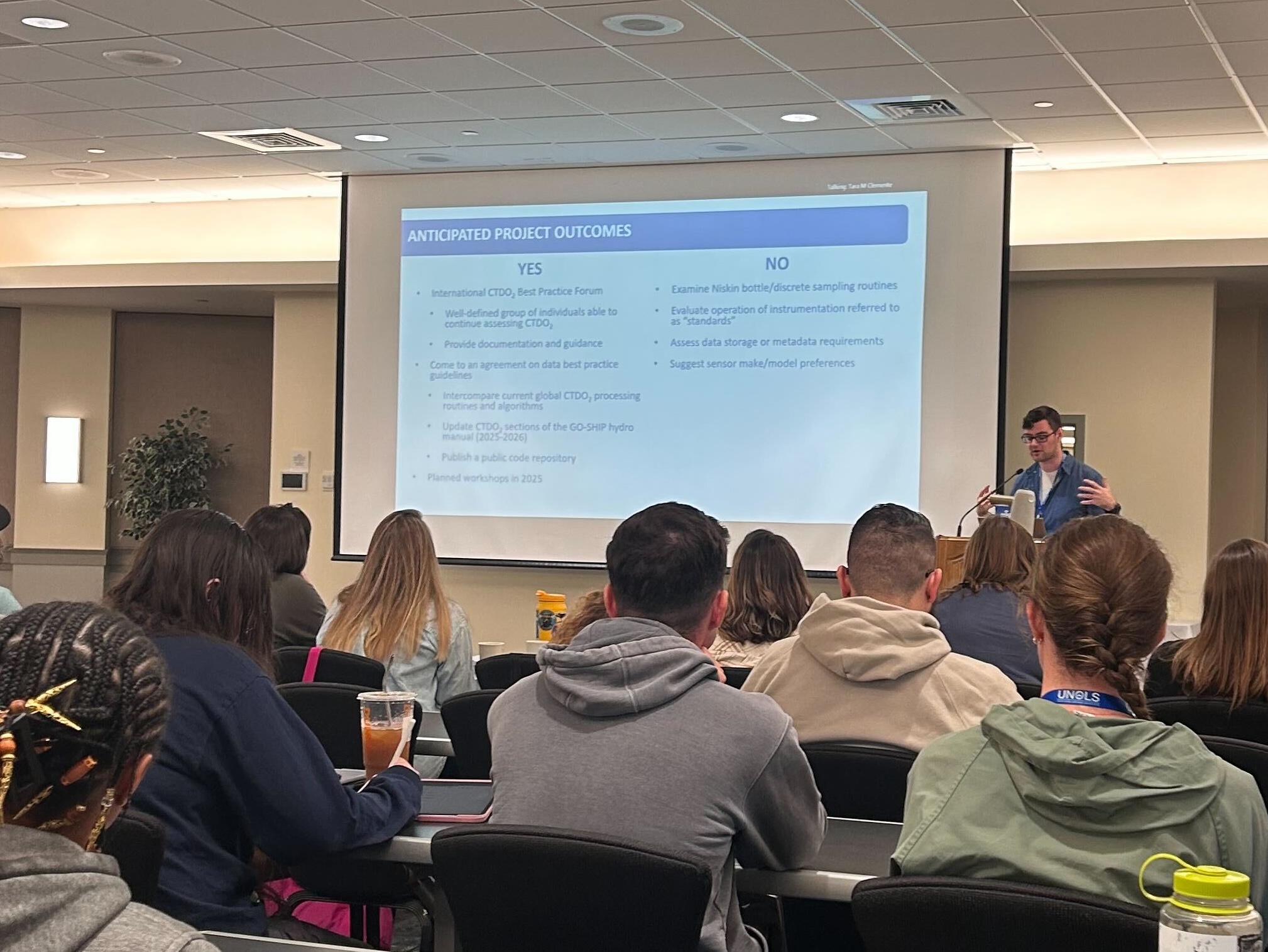
<p><img src="/assets/images/rvtec_1.jpg" alt="Presenting at RVTEC" title="Presenting at RVTEC (Photo Amber B.)" /></p>

<p>Plus, I was able to present on a project for <a href="link">IAPSO</a>. It led to a lot of interest (though it was mostly in private) regarding how <a href="link">CTD data</a> is collected and processed. There are <em>so</em> many different operations within just the ARF and this conference exposed me to the technology and groups that I’d otherwise have never found. I took plenty of notes - such that I’ve written and rewritten a task list for my return to SIO - which may be a hinderance to my coworkers. I’m filled with optimism and have numerous ideas for projects… but we still have to see out the work that is already in progress as of late 2024.</p>

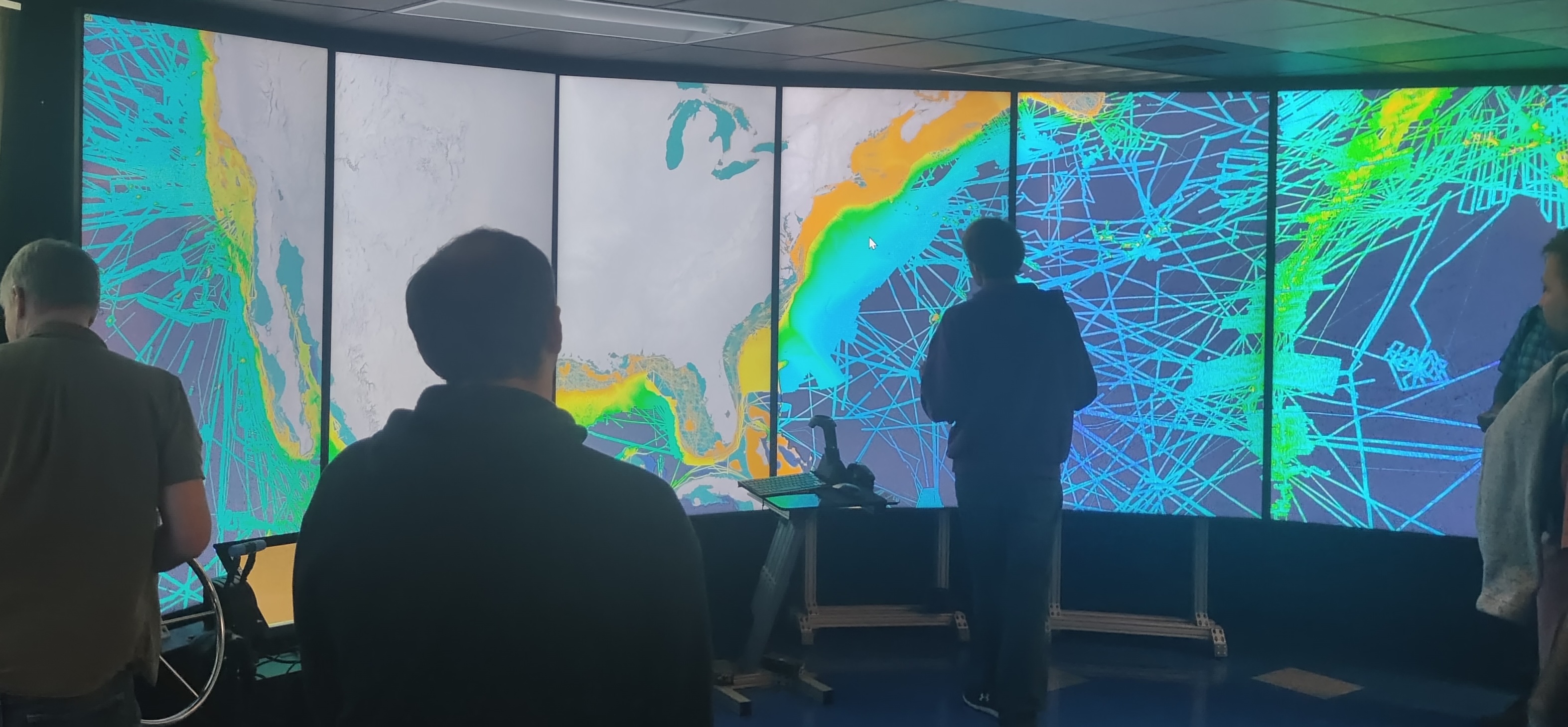
<p><img src="/assets/images/rvtec_2.jpg" alt="UNH's data visualization lab" title="UNH's data visualization lab" /></p>

<p>It’s my understanding that UNH has wanted to host RVTEC for a number of years. UNH itself is a smaller R1 institution and the oceanographic equipment they have is much more limited than a big UNOLS institution. What they are doing with their resources, however, is still incredibly impressive. I was especially impressed by their data visualization projects and their hardware shops, reminding me of the University of Washington’s Ocean Tech program in a number of ways. These projects are smaller in size or scale, but could possibly be adopted by something big. Like oceanographic “startups” that are ironing out the kinks before they make it big.</p>

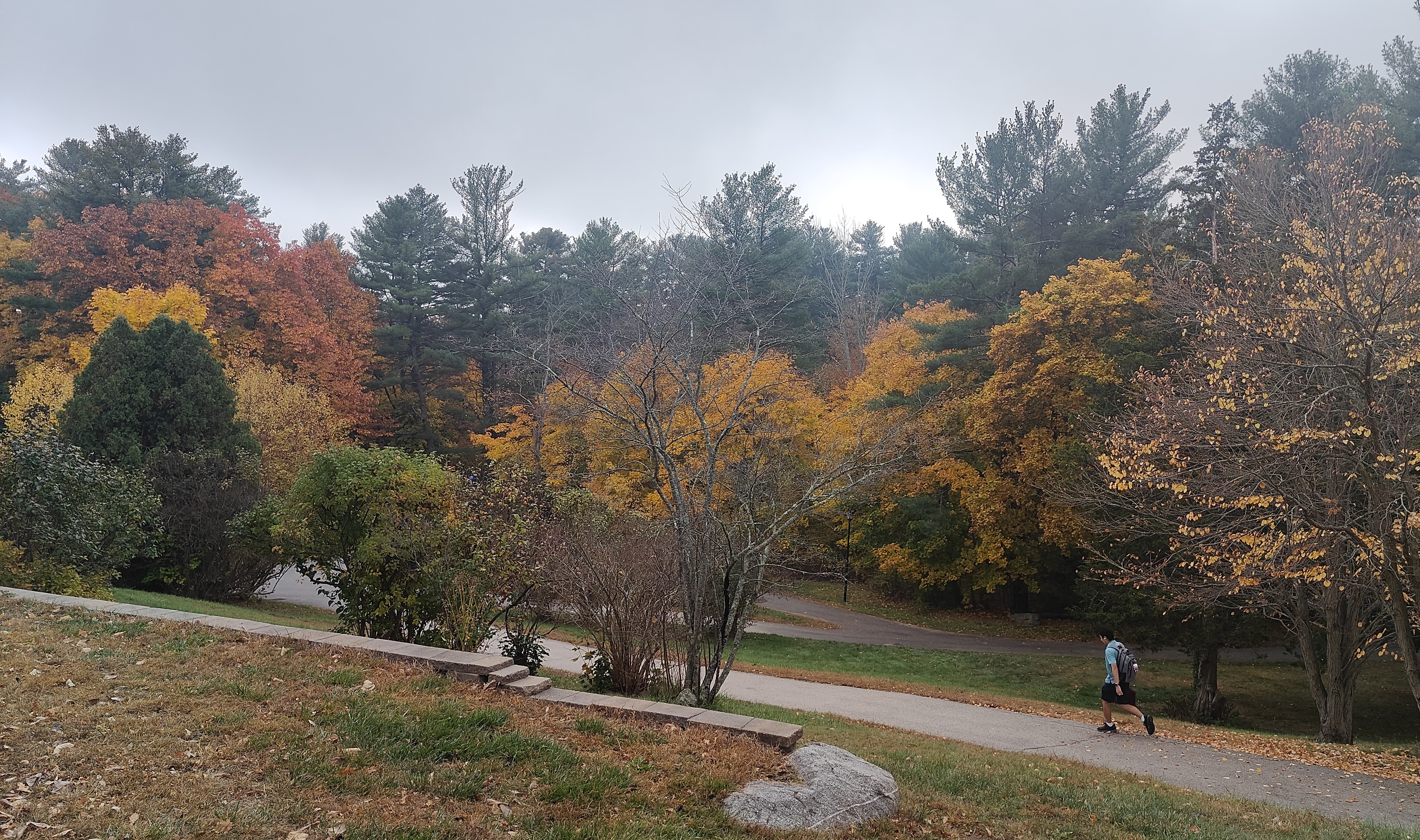
<p><img src="/assets/images/rvtec_3.jpg" alt="UNH's campus" title="UNH campus" /></p>

<p>The campus was also gorgeous. The fall leaves are a few weeks from completely fallen and it was hinted that a single big storm was all it would take to knock them down. However, it was warmer than usual in the Northeast which almost made me think it wasn’t fall at all. If ENSO conditions are accurate, then this is my first major experience with El Niño conditions this year. San Diego vacillates between warm, desert conditions and a grey marine layer. South Carolina was worse. Weird to think that it’s been 6 years since I lived somewhere with 4 defined seasons, even if 3 of them were overcast. Regardless, the weather and imagery in New Hampshire were sublime. As was the food - I had as much lobster as I could get! Eventually, I’ll return to the Northeast to see Acadia National Park and the lobster may be even better there. But for now, I’ve hit my annual lobster quota and I’m ready to go home to a good fish burrito.</p>]]></content><author><name>Aaron Mau (he/him)</name><email>aaron.mau@voiceoftheocean.org</email></author><category term="blog" /><category term="meetings" /><summary type="html"><![CDATA[Whew, it’s been longer than intended to make a second post.]]></summary></entry></feed>